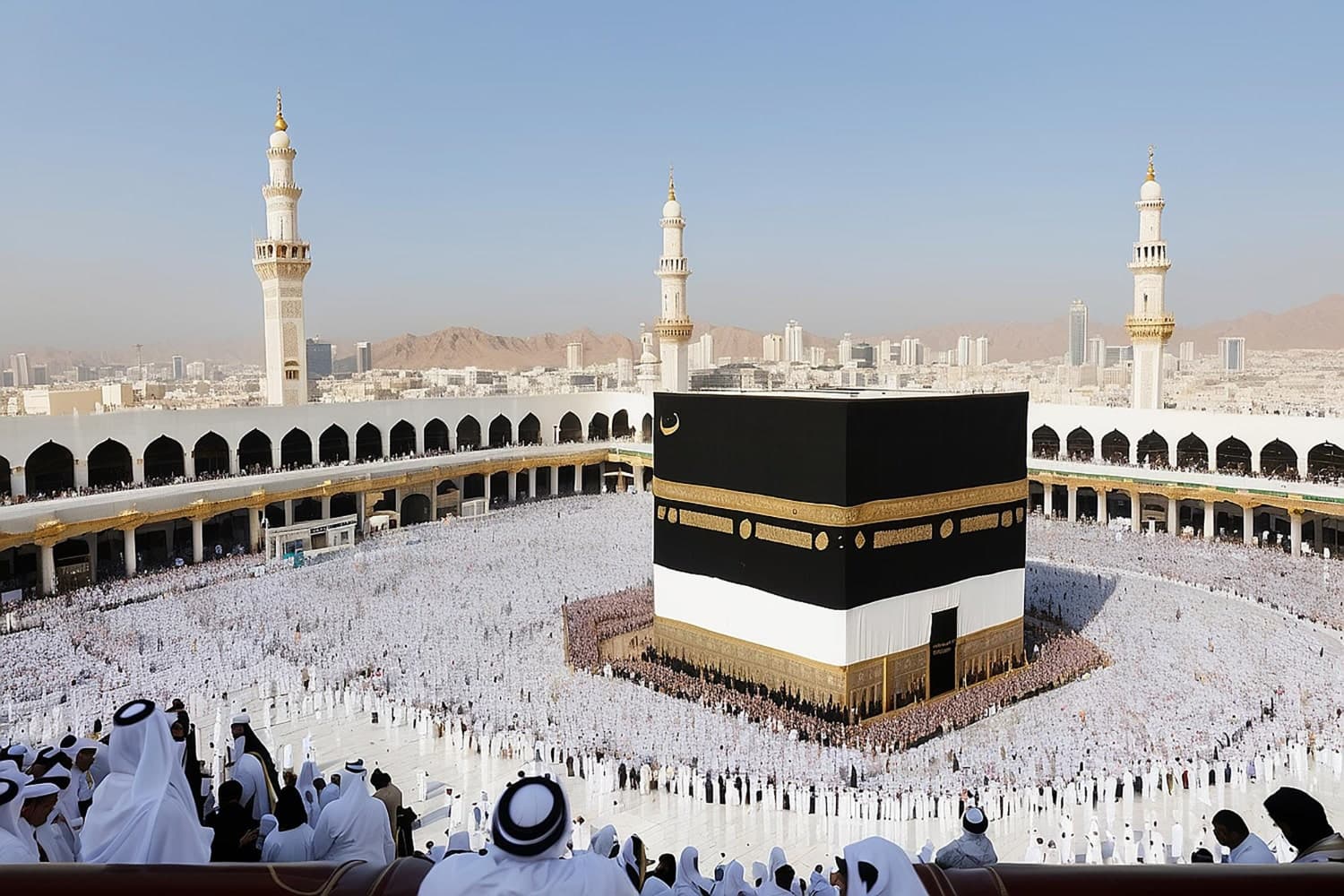
What Is Hajj?
Hajj is the annual Islamic pilgrimage to Makkah that takes place during specific days of Dhul Hijjah, the final month of the Islamic calendar.
It is one of the five pillars of Islam. Muslims who are physically and financially able to undertake the journey are required to perform Hajj at least once in their lifetime, subject to the applicable conditions of Islamic law.
During Hajj, pilgrims perform a series of acts of worship and rituals at important locations in and around Makkah, including the Kaaba, Mina, Arafat and Muzdalifah.
Hajj brings Muslims from different countries, cultures and backgrounds together in worship of one God.
Spiritual Purpose
Muslims perform Hajj because Allah has commanded eligible Muslims to undertake the pilgrimage.
Hajj is an act of worship and obedience. It gives Muslims an opportunity to demonstrate their submission to Allah, seek His forgiveness and strengthen their faith.
The pilgrimage also has deep historical significance. Many of the rituals of Hajj are connected with Prophet Ibrahim (Abraham), his wife Hajar (Hagar) and their son Ismail (Ishmael).
For Muslims, Hajj represents devotion, sacrifice, patience and trust in Allah.
Is Hajj Compulsory in Islam?
Yes. Hajj is one of the five pillars of Islam and is obligatory once in a person's lifetime for Muslims who meet the relevant conditions, including having the physical and financial ability to undertake the journey.
The Quran states:
"Pilgrimage to this House is an obligation by Allah upon whoever is able to find a way."
Surah Aal-E-Imran, 3:97
The obligation of Hajj therefore applies to Muslims who are genuinely able to perform it. Those who do not have the necessary physical or financial ability are not expected to undertake an obligation beyond their means.
Because Islamic rulings can involve detailed conditions and differences in interpretation, Muslims with personal questions about whether Hajj is obligatory in their specific circumstances should consult a qualified Islamic scholar.

Why Is Hajj One of the Five Pillars of Islam?
The five pillars form the foundation of Islamic worship and practice.
They are:
Shahadah – declaration of faith
Salah – prayer
Zakat – obligatory charity
Sawm – fasting during Ramadan
Hajj – pilgrimage to Makkah for those who are able
Hajj represents complete submission to Allah and requires pilgrims to dedicate time, effort and resources to worship.
Unlike many acts of worship that can be performed locally, Hajj requires eligible Muslims to travel to the sacred sites in and around Makkah.
What Is the Purpose of Hajj in Islam?
The purpose of Hajj is to worship Allah and fulfil an important religious obligation.
However, Hajj also carries many spiritual lessons.
It teaches Muslims about obedience, patience, sacrifice, humility and equality.
During Hajj, pilgrims leave behind many aspects of their ordinary routines and focus their attention on worship and remembrance of Allah.
The pilgrimage encourages Muslims to reflect on their relationship with Allah and their responsibilities towards other people.
The Connection Between Hajj and Prophet Ibrahim
A major part of the story of Hajj is connected with Prophet Ibrahim and his family.
According to Islamic tradition, Prophet Ibrahim was commanded by Allah to leave his wife Hajar and their young son Ismail in the area that became Makkah.
Hajar searched for water for her son and travelled between the hills of Safa and Marwah. Muslims remember her determination through the ritual of Sa'i, in which pilgrims walk between Safa and Marwah during Umrah and Hajj.
The story also connects with the emergence of the well of Zamzam.
Prophet Ibrahim and Prophet Ismail are also associated with the rebuilding of the Kaaba as a place dedicated to the worship of Allah.
These events form an important part of the historical and spiritual background of Hajj.
Why Do Muslims Go Around the Kaaba?
One of the most recognisable rituals associated with Hajj is Tawaf.
During Tawaf, pilgrims walk around the Kaaba seven times in an act of worship.
The Kaaba is located inside Masjid al-Haram in Makkah and is the direction towards which Muslims around the world face during their daily prayers.
Muslims do not worship the Kaaba itself. Rather, the Kaaba is the sacred house associated with the worship of Allah and serves as a central symbol of Muslim unity.
Tawaf is therefore an act of worship performed for Allah.
Why Do Muslims Perform Sa'i Between Safa and Marwah?
Sa'i involves walking between the hills of Safa and Marwah.
This ritual commemorates Hajar's search for water when she was caring for her son Ismail.
Her determination and trust in Allah are remembered by Muslims during Hajj and Umrah.
For pilgrims, Sa'i is more than physical movement between two locations. It is an opportunity to remember faith, patience, effort and reliance upon Allah.
Why Is Arafat Important During Hajj?
Arafat is one of the most important locations of Hajj.
On the Day of Arafah, pilgrims gather at the plain of Arafat for worship, supplication and remembrance of Allah.
Standing at Arafat, known as Wuquf, is a central part of Hajj.
The day is associated with prayer, reflection, repentance and asking Allah for forgiveness.
Arafah also reminds Muslims of the Day of Judgement, when humanity will stand before Allah.
Why Do Muslims Stay in Muzdalifah?
After leaving Arafat, pilgrims travel to Muzdalifah.
Pilgrims spend part of the night there, pray and remember Allah.
Muzdalifah is also associated with collecting pebbles for the ritual of Rami al-Jamarat.
The experience encourages patience, simplicity and devotion.
Why Do Muslims Stay in Mina During Hajj?
Mina is another important location associated with Hajj.
Pilgrims stay in Mina during specific days of the pilgrimage and perform the ritual of throwing pebbles at the Jamarat.
The Jamarat ritual is connected with the story of Prophet Ibrahim and his rejection of the temptations of Satan.
For Muslims, this ritual symbolises rejecting evil and remaining committed to obedience to Allah.
What Does Hajj Teach Muslims About Sacrifice?
Sacrifice is an important theme throughout the story and rituals of Hajj.
The example of Prophet Ibrahim demonstrates complete willingness to obey Allah.
The Islamic tradition of Eid al-Adha and the sacrifice associated with it also connects with the story of Prophet Ibrahim and his son.
Hajj reminds Muslims that faith requires sincerity, patience and willingness to put obedience to Allah above worldly desires.
What Does Hajj Teach Muslims About Equality?
One of the most powerful aspects of Hajj is the gathering of Muslims from around the world.
People from different countries, cultures, languages and social backgrounds come together for the same purpose: worshipping Allah.
Pilgrims wear simple clothing during Ihram and participate in many of the same rituals.
This creates a powerful reminder that worldly status, wealth and nationality do not determine a person's value before Allah.
Hajj therefore represents the unity and equality of the Muslim Ummah.
What Is Ihram and Why Is It Important?
Ihram refers to the sacred state that pilgrims enter before performing certain Hajj or Umrah rites.
It also involves specific restrictions and rules that apply during this state.
For many male pilgrims, Ihram is associated with two simple, unstitched pieces of cloth. Women wear appropriate modest clothing according to Islamic requirements.
The simplicity of Ihram helps pilgrims focus on worship rather than appearance, status or material possessions.
Pilgrims should learn the relevant Ihram rules before travelling and seek qualified religious guidance if they are unsure about specific matters.
What Are the Spiritual Benefits of Hajj?
Hajj can be a deeply transformative experience.
The pilgrimage gives Muslims an opportunity to:
Strengthen their relationship with Allah
Seek forgiveness
Reflect on their lives
Develop patience
Practise humility
Remember the Hereafter
Strengthen their faith
Experience Muslim unity
Increase their remembrance of Allah
Hajj also encourages pilgrims to return home with a renewed commitment to living according to Islamic principles.
Why Is Hajj Important for Muslims Around the World?
Hajj is a global act of worship that brings Muslims together in one place.
A Muslim travelling from the UK, Pakistan, Malaysia, Nigeria, Turkey, the United States or any other part of the world performs the same fundamental pilgrimage rites.
This global gathering demonstrates the unity of Muslims and creates a powerful sense of brotherhood and sisterhood.
For many pilgrims, Hajj is also an opportunity to step away from everyday life and dedicate themselves to worship.
Who Has to Perform Hajj?
Hajj is obligatory for a Muslim who meets the relevant conditions, including the ability to undertake the journey.
Ability can involve physical, financial and practical considerations.
A person who does not have the means or ability to undertake Hajj is not required to place themselves in unreasonable hardship to fulfil the obligation.
Because individual circumstances differ, anyone unsure about whether Hajj is obligatory for them should seek advice from a qualified Islamic scholar.
When Do Muslims Perform Hajj?
Hajj takes place during the Islamic month of Dhul Hijjah.
The main rites of Hajj occur during specific days of Dhul Hijjah, with the Day of Arafah being one of the most important days of the pilgrimage.
The Islamic calendar follows the lunar cycle, which means Hajj moves through the Gregorian calendar from year to year.
If you are planning Hajj 2027, check the latest official dates and pilgrimage arrangements before making final travel plans.
What Is the Difference Between Hajj and Umrah?
Hajj and Umrah are both pilgrimages associated with Makkah, but they are not the same.
Hajj is the major pilgrimage that takes place during specific days of Dhul Hijjah and is one of the five pillars of Islam.
Umrah can generally be performed at other times of the year and has a different set of rites.
Hajj has specific requirements and stages, including standing at Arafat, which is not part of Umrah.
If you are considering a pilgrimage outside the Hajj season, you can explore Umrah Packages UK to understand the travel options available.
Can Hajj Forgive Sins?
Hajj is associated with seeking Allah's forgiveness and returning to Him with sincere repentance.
There are authentic Islamic teachings regarding the great reward associated with an accepted Hajj.
However, pilgrims should not view Hajj simply as a way to erase wrongdoing while continuing the same behaviour afterwards.
The spiritual purpose of Hajj includes sincere repentance, improving one's relationship with Allah and returning to everyday life with a stronger commitment to faith and good deeds.
How Can Muslims Prepare for Hajj?
Preparing for Hajj involves both spiritual and practical preparation.
Before travelling, Muslims should learn about the rites of Hajj, understand the practical arrangements and seek reliable religious guidance.
For UK pilgrims, practical preparation may also include arranging flights, accommodation, transport, travel documents and other requirements.
If you are planning Hajj 2027 from the UK, start researching your travel options early and make sure you understand what is included in your selected Hajj package.
Hajj from the UK: What Should Pilgrims Consider?
Muslims travelling from the UK should consider several practical factors before booking their pilgrimage.
These include:
Departure airport
Flight arrangements
Accommodation in Makkah and Madinah
Hotel location
Transport arrangements
Package inclusions
Travel dates
Budget
Official visa and pilgrimage requirements
Families may also need to consider the needs of children or elderly relatives.
Travels Hook can help UK pilgrims explore available Hajj travel options and understand the details of their selected package.
Final Thoughts
Hajj is much more than a journey to Saudi Arabia. It is an act of worship that connects Muslims with their faith, history and the legacy of Prophet Ibrahim and his family.
From Tawaf around the Kaaba and Sa'i between Safa and Marwah to standing at Arafat and spending time in Mina and Muzdalifah, each part of Hajj carries religious and spiritual meaning.
For Muslims who are able to perform it, Hajj represents obedience to Allah and an opportunity to seek forgiveness, strengthen faith and reflect on the purpose of life.
If you are planning Hajj from the UK, understanding the meaning and purpose of the pilgrimage is an important part of preparation. Alongside your spiritual preparation, make sure you research your travel arrangements carefully and check the latest official requirements before booking.
Travels Hook can help UK pilgrims explore available Hajj Packages UK and travel options based on their preferred dates, departure location, accommodation and budget.
Start your Hajj journey with knowledge, preparation and sincere intention.